
Flax preparation and spinning
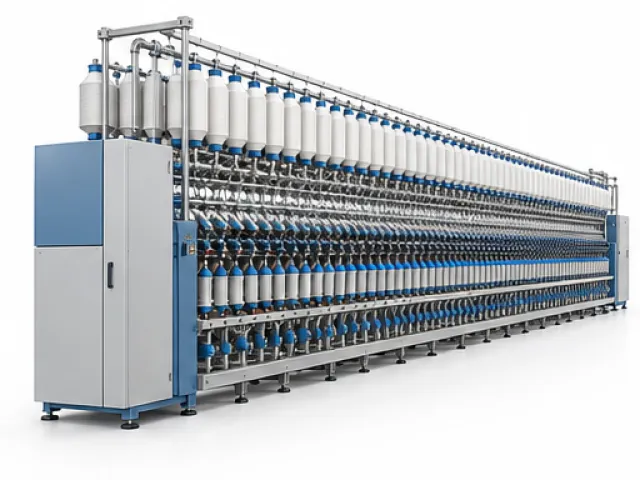
Equipment series · Flax preparation and spinning
Golden Eagle's flax preparation and spinning equipment is a family of machines that together cover a mill from raw flax to wet-spun yarn. The catalogue names hackling and sliver forming, McKay-type drawing, two roving frames split by fibre length plus a third roving model, and two wet-spinning frames. It gives model names and roles only, with no capacities, speeds or count ranges. Begin the enquiry at both ends, with the flax you will feed and the yarn you must deliver, and ask the maker to fill in the stages between.
Manufacturer: Golden Eagle Group
- Listing type
- Machine family for a flax line
- Preparation
- FX101, FX201, FX103/FX203
- Drawing
- FX280–FX284 McKay series
- Long / short flax roving
- FX401A / FX401B
- Wet spinning
- FX502 / FX506A
- Line capacity
- Set in a project proposal
Published specifications
Values below come from the maintained catalogue record. The guide review date does not renew an earlier specification: read the dated source notes and confirm a current, matched configuration before comparing products.
Swipe the table sideways to see every column.
| Parameter | Published value |
|---|---|
| Fibre process family | Flax |
| Published preparation stages | Hackling, sliver preparation and drawing |
| Published yarn-forming stages | Roving and wet spinning |
Every model in the flax catalogue
Golden Eagle gives each machine a role in the flax process. A given mill may need only part of the family, so read the right-hand column as the question to put in your enquiry. [1]
Swipe the table sideways to see every column.
| Stage | Catalogue model | Ask the maker |
|---|---|---|
| Hackling and sliver forming | FX101 hackling machine; FX201 sliver-forming machine | Which state of raw flax goes in, and what prepared sliver must come out? |
| Hackling and sliver forming in one unit | FX103/FX203 combined machine | Why the combined unit or two separate machines suit this particular fibre. |
| Drawing | FX280–FX284 McKay series drawing machines | How many passages are included, and in what container the sliver moves on. |
| Long-flax roving | FX401A | The long-flax preparation it expects and the roving it delivers. |
| Short-flax roving | FX401B | The short-flax feed and route, kept separate from the long-flax frame. |
| Further roving frame | FX402 McKay flax roving machine | Where it fits in the proposed line and when it is chosen. |
| Wet spinning | FX502 and FX506A McKay wet-spinning frames | How each is matched to the roving, the yarn target and the spindle setup offered. |
Describe the flax going in and the yarn coming out
On the input side, state whether the job is long flax or short flax, how far it has been prepared, how much it varies between lots and origins, and what fibre data your own tests give. Send representative samples and ask the maker for its conditions on feed material.
On the output side, give the yarn count together with the system it is expressed in, the end use and the properties the next process depends on. Agree test methods and limits for strength, evenness and imperfections, since the catalogue prints no quality figures.
When one stage is being replaced, list the machines before and after it, the real feed and delivery format and the throughput required. When a whole line is planned, ask for a written process route that names the stages included and those left out. A complete-equipment label on a catalogue page leaves the project boundary to be drawn in the contract. [1]
Balance the stages where material changes hands
Ask for a schedule that shows, stage by stage, the feed form, the delivered form, nominal and accepted output, material loss and how the material is moved. Where cans, bobbins or other carriers travel between machines, get their dimensions and check that they fit at both ends.
Ask how the maker balances preparation, drawing, roving and spinning for your fibre and yarn. Saleable output is set by the slowest stage, so the quickest frame in the offer tells you little. Changeovers, maintenance stops and buffer stock belong in the proposal.
FX401A and FX401B appear as separate entries for long and short flax. The catalogue splits the route only at roving, so the preparation ahead of each branch and the settings that follow it have to be written into the offer for the branch you choose.
For a retrofit, inspect the physical connections, access and controls at the stage being swapped. Name who integrates the new machine with the old ones and which test will show that material passes cleanly from one to the next. [1]
Ask for datasheets and drawings for each model
The category page lists no spindle counts, speed ranges, count limits, installed power or utility schedule. Detail links for FX401A, FX401B and FX103/FX203 returned server errors. Model numbers alone say nothing about those values, so request them from Golden Eagle for each machine offered.
Ask for a current datasheet for every revision in the quote, a process-flow drawing and a general-arrangement drawing. The layout should show material handling, service clearance, room to remove major parts and the points where the line meets your building.
Wet spinning depends on services around the frames. Ask the maker to set out water supply, temperature control, drainage and environmental provisions, with quantities and the party responsible for each.
The offer should name the company that builds the machines and cover installation, commissioning, manuals, training, wear parts and service. A group logo and a family photo are no substitute for an itemised contract. [1]
Accept the line on your own flax
These six steps turn the enquiry into a measurable specification for the connected line. Agree them with the maker before the contract is signed. [1]
Fix the material and the target
Label the flax lot and its condition, the count system, the end use and the quality tests you have agreed.
Record the route
Write down exact model revisions, the stages included, auxiliary equipment and whether the line follows the long-flax or short-flax branch.
Check each handover
Confirm the transfer form, carrier fit and handling, and that each stage feeds the next one at a steady rate.
Run the stages together
During the trial, log output at every stage, losses, stops and the operation that holds the line back over the agreed period.
Test the yarn
Use the agreed sample preparation and test methods, and keep input, intermediate and output samples together with the settings used.
Close the delivery terms
Settle acceptance limits, exclusions, who commissions the line and how any shortfall will be put right.
Compare offers on accepted yarn and full scope
Put competing proposals on the same input flax, target yarn and operating boundary. A price for a single roving frame and a price that includes preparation, handling and commissioning describe different purchases.
Ask each supplier to list supplied and optional items, site work, transport, installation, commissioning, training and first wear parts. Line the offers up by configuration, stage against stage, and keep accepted line output apart from the rating of any single machine.
Measure energy and other utilities over the agreed boundary and divide by accepted output. The family listing gives no tonnes per day, energy per kilogram, waste rate or payback figure to compare against. [1]
Prepare a useful enquiry
Check the information you have ready. Your selections stay on this device as a draft; nothing is sent to a manufacturer.
0 of 8 items ready
Open enquiry workspace →Checklist and notes are not uploaded or saved after reload. Copy or download a draft to keep it. Opening the workspace does not send this draft.
Sources & limitations
Get these in writing from the maker before you order: the process route for your flax, an up-to-date datasheet for every FX machine in the quote, the stage-by-stage capacity balance, utility and wet-process quantities, and the acceptance tests for the connected line. Line capacity, yarn quality and utility use come from that proposal, as the catalogue gives none of them. The photo shows the equipment and process setting and is not matched to each FX model or to the exact line offered.
Flax preparation and spinning equipment catalogue
Golden Eagle official group website · Undated; accessed 11 October 2026 UTC
Lists the flax machines by process role and model name. Detail links for FX401A, FX401B and FX103/FX203 returned server errors.
Each source above lists its publisher and the date it was checked. Editorial method · Report an outdated detail