Twisting and doubling machines for yarn are the core of Xinchang Jingli Machinery, a company based in Xinchang, Zhejiang. Its catalogue centres on JL628 two-for-one twisters for short-staple yarn and on JL328 doubling machines, and the company introduction adds chemical-filament twisting and winding equipment. The JL628A is the featured model. The product pages name each machine but give no dated parameter tables, so a quote starts from your yarn. Tell Jingli the fibre, count, number of ends, the twist you need and the feed and output packages, and request a technical sheet for the exact model it offers.
Jingli's introduction lists two-for-one twisting for both short-staple and chemical-filament yarn, plus doubling and winding. Most of the catalogue sits in two families. The JL628 entries are short-staple twisters, and the JL328 entries are doublers that combine ends before twisting. Mills that already run spinning frames usually need one or both steps.
Start from the operation you want to add. The table gives a first model for each job and the details that decide whether it suits you. Each model name stands for its own machine, so ask for separate data on each one and on how they connect. [1][2][3]
Swipe the table sideways to see every column.
What Jingli makes and where each machine fits
Job in your mill
First Jingli model to ask about
Details that decide the choice
Combine two or more ends onto one feed package
JL328A high-speed doubler, or JL328B where larger packages are needed
Ends per position, single-yarn count and material, the packages you feed in, and the package your twister takes.
Twist spun short-staple yarn
The JL628 series, with the JL628A as the featured model
Fibre or blend, count and its unit, construction of the feed, target twist and direction, output package.
Twist chemical filament
Filament twisting named in the company introduction
The filament you run, and which model Jingli puts forward for it in writing.
Rewind or prepare packages
Winding equipment named at company level
Package shape and size, yarn condition and the next process; ask for the model name and its sheet.
02
JL628 short-staple twisters
Short-staple versions A, C, D, E and G
JL628B listed under a separate label
Request one dated sheet per version offered
The catalogue shows JL628A, JL628C, JL628D, JL628E and JL628G as short-staple twisters. JL628B has its own entry with a separate label. Ask Jingli what changes from one letter to the next before you shortlist, because the pages give names more readily than differences.
The JL628A is the model with the fullest page. Its title and model field call it a short-staple two-for-one twisting machine. Lower down, the description moves into chemical-filament machinery and general equipment classes, with yarn and twist ranges, automation features and output claims. None of those figures sits in a dated table for the JL628A, so they are left off this page.
Ask for the JL628A sheet with its revision date, spindle arrangement, package limits, controls and installed options. If you are comparing two versions, put each on its own sheet and in its own column, and write your yarn count in the same unit on both. [1][2]
03
JL328 doubling machines
Jingli lists two doublers. The JL328A is described as high-speed, and the JL328B is the large-package model. A doubler lays several single ends together on one package so that the twister receives a ready feed, which makes it the step before a JL628 in many mills.
The JL328A page combines its own listing with a general passage on winding and an example built around a machine with a different name. The efficiency and yarn-quality percentages in that example belong to the other machine. Ask Jingli for the JL328A winding method, controls, number of ends, package limits and the speed it reaches on your yarn.
Send the size and mass of the package your twister takes. The doubler output and the twister feed have to match, and the cheapest way to settle that is before either machine is quoted. [1][3]
04
Plan a trial on your own yarn
The steps below give a buyer's route from samples to acceptance. Agree them with Jingli before the machine is set up, so the result can be repeated after delivery. [1][2][3]
Send the yarn you will run
Ship a representative lot with its fibre or blend, yarn count and unit, number of ends and preparation stage. Add the real dimensions and weight of the feed packages.
State the result you need
Give the twist level and direction, the package shape and size, the yarn length per package and the process that follows.
Fix the machine set-up
Name the model, the spindle or winding arrangement, the controls and the utilities. Decide which steps need a doubler or winder alongside the twister.
Check yarn and package
Agree how twist, yarn condition and package build are measured, where samples are taken and the limits for each. Keep both input and output samples with the settings used.
Run it for a working shift
Log the good output, breaks, stops, doffing and handling over an agreed period, and measure power. Unwind the packages in the next process before signing off.
05
A 2014 spindle patent in the company's name
Chinese utility model CN203866453U carries the company's exact Chinese name on its cover and covers a spindle for a short-staple two-for-one twister. It was filed on 19 March 2014 and published on 8 October 2014. The patent record ties Jingli to twister design for more than a decade.
The filing describes one spindle arrangement. It gives no data for a current JL628A, and it says nothing about whether that spindle is fitted to the machine you are offered or whether the right is still in force. Ask Jingli which spindle the quoted machine uses.
The patent cover gives an older address, while the current contact page gives Yanjiang West Road. Ask which legal entity will sign the contract and where the machine is built and can be inspected. [4][5]
06
What the quotation should cover
A complete offer names the model and configuration, the yarn and package limits, the floor space including operator access, the utilities and a list of wear parts and consumables. It should also say who handles installation, commissioning and operator training, and what the agreed yarn trial must show.
Jingli's introduction speaks of technical support and after-sales service in general terms. Response times, the warranty period, spare-part supply and the delivery date are not stated, so put each of them into the contract.
Jingli's certificate page carries text about a paper-machinery business. Ask for current certificates directly if your purchase needs any. A short checklist for reading a manufacturer profile helps when you buy from a less familiar maker for the first time. [1][4][6]
Equipment & specifications
Published model or series information. Open the equipment record for its full scope and configuration notes.
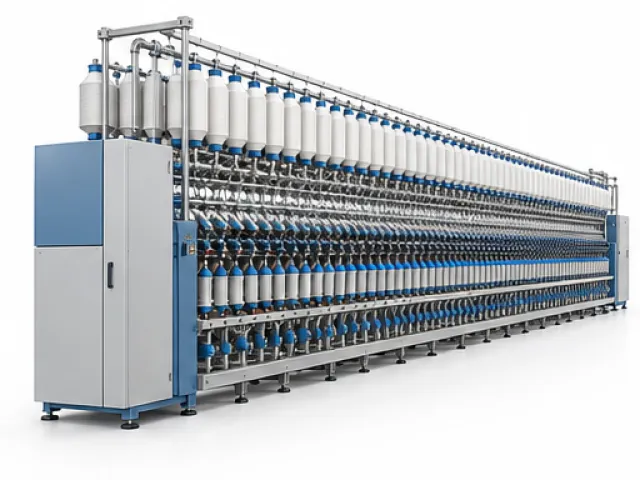
Generic spinning machinery illustration · not the listed equipment
The JL628A is a two-for-one twisting machine for short-staple spun yarn, made by Xinchang Jingli Machinery. Its listing gives the model, the product label and a photograph of a multi-position frame, without a dated parameter table. To get a useful quote, send yarn samples with fibre, count and unit, number of ends, target twist and both package sizes, and ask for a JL628A sheet showing revision, spindle layout and options.
Checklist and notes are not uploaded or saved after reload. Copy or download a draft to keep it. Opening the workspace does not send this draft.
Sources & review
The model names, address and range come from Jingli's own pages, and the spindle details from the 2014 Chinese patent publication. No site staff have toured the Jingli plant or operated its twisters and doublers. Before ordering, ask Jingli to confirm in writing: the model, revision and full technical sheet of the machine quoted, its yarn and package limits for your yarn, the trial results you will accept, the contracting entity and factory address, any certificates you need, and the warranty, spare-part, training and delivery terms.
Jingli company introduction and catalogue navigation