
JY-2025 · Stenter
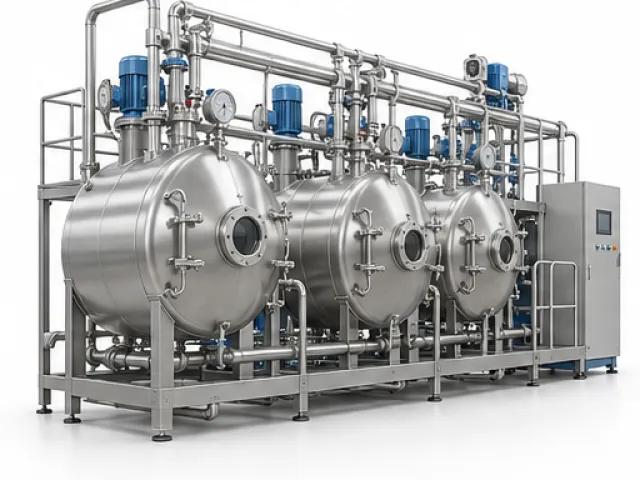
Equipment model · JY-2025
The JY-2025 is a stenter for drying and setting woven and knitted fabric. Its maker gives it a smaller oven volume to cut heating time, 150 mm insulating panels, a through-type lower exhaust that puts outgoing heat to second use, air-cushion nozzles, plus hot-air curtains for the entry and exit chambers. The product page, dated 4 November 2023, lists the design but no table of widths, speeds or temperatures. You get those with a configured offer, so send the fabric and site details first.
Manufacturer: Jiuyi Machinery Industry
- Insulation
- 150 mm panels
- Exhaust
- Through-type lower exhaust with secondary heat use
- Air delivery
- Air-cushion nozzles; hot-air curtains on first and last chambers
- Controls
- E+L, Lenze, Omron E5EC, Siemens
- Option
- Double-blade edge cutter
- Product page
- Dated 4 November 2023
Published specifications
Values below come from the maintained catalogue record. The guide review date does not renew an earlier specification: read the dated source notes and confirm a current, matched configuration before comparing products.
Swipe the table sideways to see every column.
| Parameter | Published value |
|---|---|
| Insulation-panel thickness | 150 mm |
| Nozzle arrangement | Air-cushion nozzles |
| Heat-retention feature | Hot-air curtain |
The JY-2025 oven: insulation, exhaust and air delivery
Most of what Jiuyi publishes about the JY-2025 concerns the oven. A smaller internal volume is meant to bring chambers up to heat faster, and the 150 mm panels are meant to hold that heat in. The table sets each feature beside the drawing or test that will show how it behaves on your line.
Total fuel use still depends on the chamber layout, the heat source, how wet the cloth is and the recipe you run. The page gives no figure for recovered heat or for savings, so treat the metered acceptance run as the place to measure them. For background on how stenters dry, set and feed cloth, see stenters and other dyeing and finishing machinery. [1]
Swipe the table sideways to see every column.
| Feature | What Jiuyi describes | What to ask for |
|---|---|---|
| Oven volume | Reduced volume to shorten heating time | Internal dimensions per chamber and time from cold to set temperature. |
| Insulated panels | 150 mm panels with insulating fill | Panel build, door seals and surface temperature at working heat. |
| Lower exhaust | Through-type exhaust below the chambers; outgoing heat reused | A flow diagram marking where heat is taken back and where it is measured. |
| Air-cushion nozzles | Aimed at fewer snags and even heating | Nozzle access for cleaning and a temperature check at the edges and centre. |
| Hot-air curtains | Heat from around the exhaust duct warms clean air for the end chambers | How clean air is kept apart from exhaust, and how the curtains are controlled. |
| Modular build | Chambers assembled as modules | Module layout, installation order and service clearances. |
Who supplies the JY-2025 controls
Jiuyi lists a named brand for each control job on the cloth path. Request the part numbers fitted to your machine, because brand names alone leave the model and range open. Check that the overfeed range suits your knit or woven fabric, since no range is printed on the page. [2]
Swipe the table sideways to see every column.
| Job | Brand listed | Check on your order |
|---|---|---|
| Edge sensing and pin guiding | Erhardt+Leimer (E+L) | Sensor and guide layout, and how it copes with curled edges. |
| Pinning and pressing | Lenze | How firmly the pins hold, the setting range and access for upkeep. |
| Tension sensing | E+L tension sensor | Measuring range, calibration and where it sits on the line. |
| Temperature control | Omron E5EC series | Number of zones, probe positions, logging and over-temperature cut-out. |
| Tension and operator screen | Siemens electrics and touchscreen | Hardware and software versions and whether recipes are stored. |
| Overfeed drive | Siemens inverter and motor | Overfeed range and how repeatable it is on your cloth. |
| Edge trimming | Double-blade cutter, optional | In or out of the price, waste collection and guarding. |
Sizing a JY-2025 line for your fabric
The page leaves out width, speed, temperature, number of chambers, heat source, power, weight and footprint. Nothing in the photos or model name fixes those values. Ask for a dated drawing and technical sheet drawn up for your fabric. Check your electrical supply against the power list in that sheet. Once you hold two offers, line them up side by side item by item. [1] [2]
Swipe the table sideways to see every column.
| You send | The offer should give | Why it matters |
|---|---|---|
| Blend, construction, entry width, weight and moisture | Chamber count, heating and transport layout | Wetter or heavier cloth needs more drying capacity. |
| Exit width, shrinkage and weight targets, and look | Recipe, control settings and how results will be measured | Line speed by itself says little about finish quality. |
| Shade and finish changes, delicate faces | Changeover and cleaning method, plus a sample run | Shows staining, carry-over, snags and oil spots on real cloth. |
| Utilities on site and floor space | Heat source, full power and services list, layout | Lets you plan the electrical supply, access and auxiliary units. |
| Local exhaust rules | Ducting, treatment connection points and who supplies what | The lower exhaust is part of the machine; site treatment is a separate job. |
Keeping the chambers and exhaust clean
On the JY-2025 each chamber has lower exhaust outlets that open for cleaning inside. Find out which deposits a cleaner can actually reach, what tools and access are needed, and the shutdown and lock-off steps. Put cleaning interval, labour hours and lost running time into any cost comparison.
The product page also speaks of ending oil drips, patchy temperature, curled edges and fires. Use those as targets for the trial and for daily running. Ask what protection and monitoring are supplied, get the maintenance manual, and agree which safety tasks fall to your staff with your finishing chemicals.
Modular chambers make assembly simpler. Moving or extending the line later is a new engineering job, so ask for the service access plan and part replacement routine for the layout you buy. [1]
Acceptance run under a fixed recipe
Set tolerances with your quality team and Jiuyi before the acceptance test starts, then run your own fabric through the delivered line in these steps. [1] [2]
Label the test lot
Record blend, construction, width and weight going in, moisture, and any earlier treatment or chemicals on the cloth.
Write down every setting
Log speed, width, overfeed and tension, each chamber temperature, airflow and exhaust, with the build as delivered.
Sample left, centre and right
Check the agreed points across the width and down the length for finished width, shrinkage and visible faults.
Count good metres
Measure accepted output over a set time, and log rejects, rework, stops, start-up and changeovers on their own lines.
Meter energy within a stated boundary
Read fuel or thermal input and electricity with times and units, say which auxiliaries are inside the boundary, and compare only runs with matching fabric and load.
Keep the record
File the test sheet, approved fabric, running and cleaning instructions, and clear open faults before signing off.
What the JY-2025 contract should cover
Jiuyi shows its component brands under a strategic cooperation heading. Ask for the bill of materials of your unit and who supports each bought-in part after delivery.
A touchscreen item on the site mentions worldwide warranty. Get the warranty terms for the parts and the whole machine in writing: exclusions, who pays for parts, freight and labour, and the service contact in your country. Component cover may stop short of on-site commissioning.
Set out the build and installation dates, the utilities your mill provides, the fabric for commissioning, operator training, spare parts, test records and support after start-up. [2]
Prepare a useful enquiry
Check the information you have ready. Your selections stay on this device as a draft; nothing is sent to a manufacturer.
0 of 8 items ready
Open enquiry workspace →Checklist and notes are not uploaded or saved after reload. Copy or download a draft to keep it. Opening the workspace does not send this draft.
Sources & limitations
Ask Jiuyi to confirm in writing before you order: the chamber count, width, speed, temperature range and heat source of your JY-2025; the part numbers and overfeed range; the oil and fire protection supplied; the cleaning routine; the warranty for parts and machine; and the metered energy use and good output from the acceptance run.
JY-2025 stenter product description
Zhejiang Jiuyi Machinery Industry · 4 November 2023; accessed 11 October 2026
Describes the oven volume, 150 mm insulation, lower exhaust with heat reuse, air-cushion nozzles, hot-air curtains and modular chambers.
Published component and option list
Zhejiang Jiuyi Machinery Industry · Undated; accessed 11 October 2026
Names the E+L, Lenze, Omron and Siemens control parts and the optional double-blade edge cutter.
Each source above lists its publisher and the date it was checked. Editorial method · Report an outdated detail