Shaoxing Kanglide Machinery builds wet-processing and finishing machines in Keqiao, Shaoxing. Its catalogue is split into opening and squeezing machines, slitting and lint-removal lines for cotton knits, combinations with a softening stage, and vacuum dewatering units. The best-documented model is the B-type, which handles opening, slitting, lint washing and squeezing for open-width or tubular cotton knitted fabric. For a quote, tell Kanglide what form your fabric arrives in, whether it has to be slit, and what condition the next machine in your mill expects.
Kanglide sorts its wet finishing range by the work each line does. Two machines with similar names can carry quite different stages, so begin with the state of the fabric as it reaches the machine and the state the following process wants it in.
Each row pairs a catalogue entry with the fabric Kanglide describes it for. The last column is the first question to put to the sales engineer. [1][2][3][4]
Swipe the table sideways to see every column.
Which Kanglide line fits your fabric
Catalogue line
Fabric it is described for
First question to ask
B-type opening, slitting, lint removal and squeezing
Open-width or tubular cotton knits
Does your knit need slitting, and how clean must it leave the wash?
Opening and squeezing machine
Polyester knits and cotton knits
Are opening and squeezing enough on their own, or do you also need a cutter and wash section?
Line with a softening stage
Cotton knits; shown on the same page as the B-type
Which softener bath comes with it, and what squeeze sits before and after it?
Vacuum dewatering unit
Thin high-count, high-density synthetics and woven fabrics
Will vacuum suit your fabric, and how will the unit join the line you already run?
02
B-type: four jobs on one frame
Small padder, opener and cutter at the infeed
Eight spray groups over four filtered tanks
Second padder and exit device at delivery
On Kanglide's drawing, cloth enters through a small padder and moves into an untwisting and opening zone fitted with a cutter. It then crosses a lint-washing section where eight spray groups work over four tanks, each with its own filter, passes a second padder, and leaves over an exit device.
The published table lists 0–95 m/min, a working width of 2,200–2,500 mm, 38 kW of design power drawn from AC 380 V at 50 Hz, and outside dimensions measuring 9,900 × 4,500 × 6,000 mm. The feature sheet offers covers for parts of the washing section and stainless cladding as extras.
Model data, utilities and trial steps are set out on the B-type equipment page. When you ask for a price, request the drawing of the precise build being offered and an itemised list of everything included. [2]
03
When softener goes on in the same pass
Further down the same product page, Kanglide shows a cotton-knit line that adds a softening stage between lint removal and the last squeeze. Kanglide gives it 45 kW and a footprint of 13,200 × 4,500 × 6,000 mm, so it is longer than the B-type and carries a heavier electrical load.
If softener has to be applied at this point in your process, name the softening line in the enquiry and ask for its bath, chemical handling and both squeezes to be quoted. Line the offers up stage by stage; the guide to comparing machine configurations shows a simple way to do it.
Both lines belong to the wet end of knit finishing, so think about what the dryer or stenter after them needs to receive. That target decides which stages you actually pay for. [2]
04
Test the line on your own cotton knit
Trial plan for an opening and squeezing line
Fabric can travel through a line without a hitch and still arrive at the next machine with a fault. Bring a representative roll and look at opening and slitting, lint removal and water removal one by one before judging the overall result. A trial with your own fabric settles all three faster than any brochure.
Describe the fabric
Give the knit construction, width, tubular or open-width form and wet condition, and say how much these vary. State whether the fabric must be slit and where the cut should fall.
Set limits for opening and cutting
Agree the width and form you need, then look at creases, distortion, edges and the cut line. Ask which detection and control parts are actually in the supply.
Judge the lint result
Decide how a clean fabric will be assessed. Watch the wash and filter settings, the lint that collects and the cleaning work the operator has to do.
Measure water after the last padder
Fix the sampling points, the measuring method and the target. Log fabric, speed, padder settings and any water or treatment added. Meter energy on its own if running cost matters, since a design kW figure is a connected load.
Keep the whole record
Note good output, stoppages, operator actions and metered utilities. Store the settings and samples, and tie the acceptance of the delivered line to them in the contract.
05
Hall height, water and power
With an overall height of 6,000 mm, the B-type needs a building that can take it. Ask for a current installation drawing showing operator and service access, trolley space, handling routes and clearances, and plan the floor and foundations from that drawing.
Kanglide's table gives compressed air at 0.4 MPa through an Ø8 connection, water in at 0.1 MPa through DN40, and a DN65 outlet. These are pressures and pipe sizes. Ask for air and water flow rates, the water quality required, the drainage arrangement and a complete electrical schedule for the line you are offered.
Decide early who provides the transfers before and after the line, the utility hook-ups and the controls, and who handles installation, commissioning, operator training and filter maintenance. Price, lead time, spares and support terms belong in the quotation. Kanglide's introduction speaks of energy saving across its range; if that matters to the decision, ask for a figure measured on your fabric. [1][2]
06
Company background
Kanglide's introduction describes its design and manufacturing resources and its textile finishing machines, and it mentions the design software and component brands it works with. The contact page puts the company on Xingbin Road in Keqiao. Ask directly for production capacity, component origin and customer references if your manufacturer profile checks call for them.
The exact Chinese company name sits at row 132 on page 7 of a Keqiao district list: the second batch of firms proposed in 2020 for employment-stabilisation social-insurance refunds. It ties the registered name to the district in that year. The list is silent on whether a refund was paid, on present finances, on certification and on machine performance. [1][5][6]
Equipment & specifications
Published model or series information. Open the equipment record for its full scope and configuration notes.
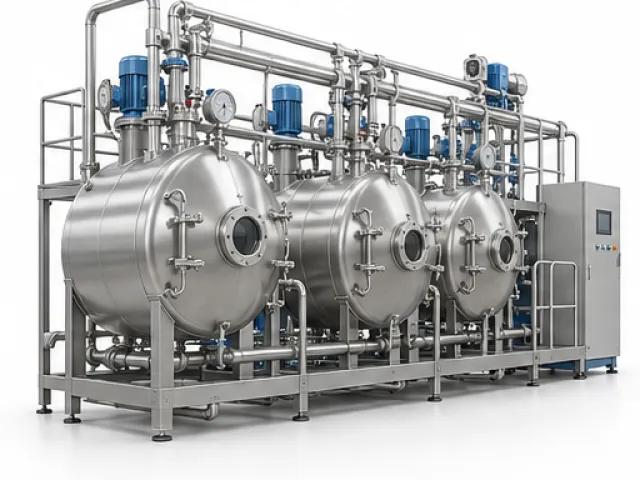
Generic dyeing & finishing machinery illustration · not the listed equipment
Kanglide's B-type is one line for cotton knits that opens, slits, removes lint in a four-tank wash and squeezes, taking fabric open-width or tubular. Published data: 0–95 m/min, 2,200–2,500 mm working width, 38 kW, 380 V/50 Hz, and a 9,900 × 4,500 × 6,000 mm envelope. Ask for a quote with your knit construction and width, incoming form, slitting need and target water content.
Swipe the table sideways to see every column.
B-type opening and squeezing series catalogue values
Checklist and notes are not uploaded or saved after reload. Copy or download a draft to keep it. Opening the workspace does not send this draft.
Sources & review
Stages, figures and connections on this page come from Kanglide's catalogue pages; the 2020 entry comes from a Keqiao district document. No Kanglide line has been run for this page. Before ordering, ask Kanglide to confirm in writing: the stages and options in the line you buy, its working width, electrical load and air and water flows, the lint and moisture results you will accept after a trial on your fabric, and the installation, training, warranty and spare-part terms.
Diagrams and parameter tables for the B-type and the softening line, with stages, 38 kW and 45 kW, overall sizes and utility connections. An A-type is shown on the same page.
Publication: Undated; accessed 11 October 2026 · Reviewed: 2026-10-11