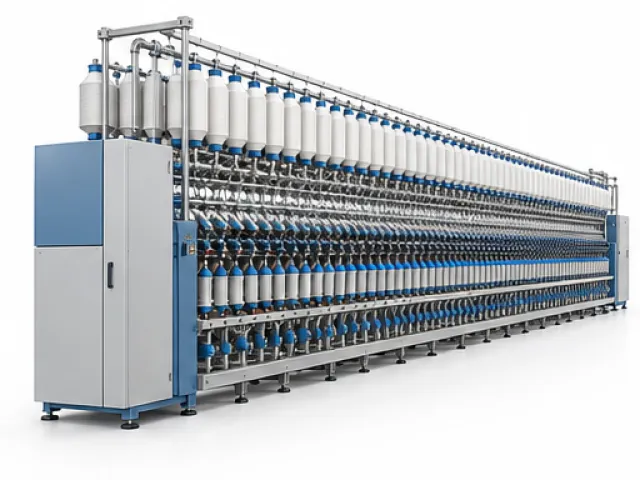
Xinchang Lanxiang Machinery builds yarn-processing machines in Xinchang, Zhejiang. The range covers four jobs: the LX600 for chenille and patterned yarn, the LX2020 for polyester crepe yarn made in one combined pass, the LX1000 for texturing with an optional spandex device, and a mother-yarn splitting machine. Pick the model by the yarn you want to sell. Then send Lanxiang your feed yarn, a reference sample and the package format you need, and ask for a quote on the exact configuration that will run your trial.
Lanxiang sells chenille, false-twist, texturing and splitting equipment. Each family serves a different yarn, so most buyers need one of them, sometimes two in sequence. The buying guide to chenille, crepe and texturing machines explains how these processes differ. The table shows which Lanxiang model belongs to each job and what to settle before you ask for a proposal. [2][3][4][5]
Swipe the table sideways to see every column.
Four machine families for four kinds of yarn
Yarn you want
Lanxiang machine
Settle before you ask for a quote
Chenille or patterned yarn
LX600 chenille machine
Core and effect yarns, target count and look, winding package and the pattern you need.
Polyester crepe yarn for silk-like fabric
LX2020 one-step false twisting
A polyester filament sample, the crepe character you want and the fabric you will judge it in.
Textured yarn, with a covering arrangement if needed
LX1000 texturing configurations
Polymer, feed yarn type and count, final yarn construction and whether spandex or air covering is included.
Separated yarn from a mother-yarn feed
Mother-yarn splitting machine
Feed package, filament arrangement, the separated output you need and the take-up format. The catalogue page gives no full numerical specification, so ask for one.
02
LX600: describe the yarn effect before you talk about speed
Lanxiang describes the LX600 chenille machine as having servo-controlled rollers and separately driven spindles. Those drives exist so the yarn recipe can change. A plain chenille and a large-belly patterned chenille are different jobs on the same frame, and the quote should say which one it covers.
The LX600 equipment page sets out the drive arrangement, older specification limits, installation points and a sample checklist. Older Lanxiang wording mentions seven segments, while newer material mentions sixteen segments per cycle. Ask which controller version your quote includes and how many segments it gives you.
When you enquire, send a real reference yarn or a well-documented one, and list the appearance features that must stay consistent. A photo of the finished fabric is too vague: it leaves the yarn construction, the machine settings and the pass standard open. [2]
03
LX2020 combines twisting, preshrinking and false twisting
Lanxiang's LX2020 page describes a one-step process for polyester filament yarn. The machine twists, preshrinks and false-twists in one pass, and the crepe yarn it makes goes into silk-like polyester fabrics. That is a separate goal from chenille. One-step means the yarn stages are joined; the machine does not weave or finish fabric.
Lanxiang's 2022 Chinese catalogue names the use as weft yarn for polyester imitation-silk fabric. So judge the trial yarn twice: once as yarn, and again in a fabric made on your intended weaving route. Agree with Lanxiang which weaving and finishing conditions belong to that fabric test, so the result means more than a machine running well in a demonstration.
The 2022 catalogue also carries a specification table. Treat it as history. Ask for the specification sheet and configuration revision that belong to the machine you are offered. [3][7]
04
LX1000: quote an exact configuration, not a model name
Lanxiang titles the LX1000 as a texturing machine with a spandex device. Each godet has its own drive, and the A and B sides run fairly independently, with process settings adjustable on each side. Those features are the questions to raise when you define your configuration.
The page gives two different count ranges. Its application text mentions 50–300D nylon, recycled PET and functional fibres, while the specification table gives a 20–200D spinning range. Check which denier range applies to your feed yarn. The page also lists a maximum speed of 1,000 m/min next to a process speed of 800–900 m/min. Your real output depends on the feed yarn and the finished construction, so ask for the speed Lanxiang expects on your yarn.
Get one consistent specification for the configuration you plan to buy, then compare offers line by line against it. [4]
05
Company background and in-house manufacturing
Lanxiang says it started in 2002 and, after a change of direction in 2010, focused on developing, building and customising textile equipment. The two dates mark different milestones in the company's own history.
The company lists CNC machining centres, laser cutting, bending equipment, precision lathes and test benches. It offers mechanical and electrical customisation when a standard machine does not fit. Use these as topics for the discussion, and ask for the tolerances, inspection results and development lead time that apply to your order.
The official ITMA ASIA + CITME 2024 exhibitor directory lists XINCHANG LANXIANG MACHINERY CO., LTD. at booth H5.1-F25, with the same Chinese legal name, Meixi Road address and company website. A similarly named company from Wuxi appears in the same directory search; it is a different business.
For a customised machine, the offer should name the changed assemblies, the electrical scope, the documents supplied and who is responsible for acceptance. Lanxiang mentions certificates and patents without dates, so ask for the certificate and serial-specific test records that cover your machine. [1][6]
06
A trial that answers your own yarn question
Buyer checklist to agree with Lanxiang before the trial
A good sample brief ties the yarn you want to the configuration you will buy. These steps are a buying sequence for agreeing the trial with Lanxiang. Confirm which tests the company will actually run.
Define the input and output
Send representative feed packages and the target yarn, and run the trial on your own feed yarn. For chenille, name the effect you want. For crepe yarn, include the fabric it will go into. For the LX1000, state polymer, feed type, count and covering construction.
Freeze the trial configuration
Record the machine version, included devices, process settings and sample labels. Write down every setting or material that changed during the run.
Judge the accepted output
Agree what an acceptable sample looks like before anyone measures output. Log rejects, yarn breaks and stops next to the accepted output, and keep the samples and any fabric test results.
Carry the result into the offer
Tie the accepted sample and its test conditions to the quoted configuration. List the main machine, optional devices, package interfaces, utilities, installation, training and acceptance documents as separate lines, so every proposal covers the same scope.
07
Check the interfaces that decide whether the machine fits your mill
Ask for a current installation drawing for the machine length and configuration you choose, with room for loading, operation and maintenance. A body dimension from the catalogue will not lay out your workshop. The LX600 equipment page explains why its older text dimensions and the newer drawing need to be checked against each other with Lanxiang.
For texturing or covering machines, ask for the power and compressed-air needs of the devices actually included. Name the feed and take-up packages, consumables, spare parts, manual language and commissioning duties in the offer, and agree the terms for acceptance at handover. A device shown on a family page may be optional, so check that each one you need appears in your quotation. [2][4]
Equipment & specifications
Published model or series information. Open the equipment record for its full scope and configuration notes.
Generic spinning machinery illustration · not the listed equipment
A sectional machine from Xinchang Lanxiang for chenille, large-belly and pearl yarn. The 2022 catalogue gives 1–25 Nm, 4–18.5 m/min delivery, ten spindles per section at 200 mm pitch and up to fifteen sections. Servo rollers and frequency-controlled spindles let each section run its own pattern. Send a reference yarn, its component yarns, the finished count and the number of sections you plan to buy, then request a quote that covers a trial on that setup.
Checklist and notes are not uploaded or saved after reload. Copy or download a draft to keep it. Opening the workspace does not send this draft.
Sources & review
The facts above come from Lanxiang's current product and company pages, its 2022 LX2020 catalogue and the official ITMA ASIA + CITME 2024 exhibitor listing. Before ordering, ask Lanxiang to confirm in writing: the controller version and segment count for the LX600; the count range and expected speed of the LX1000 on your feed yarn; the current LX2020 specification sheet; figures for the splitting machine; the full device list, utilities and installation drawing for your configuration; and the certificates and test records for the delivered machine. Base the order on a matched sample trial and the written proposal that goes with it.
Current company introduction and manufacturing and services description