Shaoxing Micheng Electromechanical, based in Keqiao, Shaoxing, makes mechanical selvedge equipment for weaving machines and sells it under the Micheng and Hui Laite names. Its catalogue is split by loom family: large rapier, small rapier, water-jet, air-jet and other loom types. The model listed on this site is the K88 middle-head assembly from the large rapier group, which sits beside a separate K88 left/right-head listing. Micheng says the aim of its equipment is a neat, flat fabric edge. To get a quote, send your loom make and model, the head position you need, a photo of the part now fitted and a sample of the edge you accept.
Micheng sorts its selvedge equipment by the loom it serves. Large and small rapier machines each get a group of their own, followed by water-jet, air-jet and a group for other loom-related parts. Begin in the group that matches the looms in your weaving mill, then narrow the choice down to the head position.
A part shown in one group is offered for that loom family. If your floor runs a mix of rapier and water-jet looms, ask for a separate offer line for each family, each with its own part code. [1][3]
Swipe the table sideways to see every column.
How the Micheng catalogue is organised
Group
What you find there
What to send Micheng
Large rapier looms
The K88 middle-head assembly and the K88 left/right-head assembly
Loom make and model, plus the position of the head you are replacing.
Small rapier looms
A separate set of selvedge parts
Loom model and a photo of the part fitted today.
Water-jet and air-jet looms
One group for each loom type
Loom model and the edge you need on that fabric.
Other loom-related equipment
Parts outside the main loom groups; boxes, bases, arms, gears and supports also appear across the catalogue
A list of the items your installation needs, so each can be priced on its own line.
02
Middle head or side heads
Inside the large rapier group, the K88 name covers two listings. One is the K88 middle-head assembly. The other is the K88 left/right-head assembly for the outer edges. Micheng gives them separate pages, and nothing in its catalogue says one can stand in for the other.
Before writing to Micheng, mark on a loom drawing or photo where each head sits and which one has worn. Add the fabric width arrangement, because a middle head forms an edge inside the woven width while the side heads work at either end.
The middle-head title also repeats on more than one catalogue page. Ask for a single part code and drawing number for whichever version is offered to you. [2][3]
03
Fitting a Micheng head to your loom
Micheng's listings name each assembly and its loom group. They leave out mounting dimensions, drive details, timing, rated speed and service life. Get those values as a dimensioned drawing with a revision mark, together with an interface sheet for the configuration you are buying.
Check the mounting datums, the drive connection and the space around moving parts against the loom itself. Ask how the head works with the edge-handling parts already on the machine, and have any cutting, gripping or yarn-guiding pieces quoted as separate items.
Settle who installs and adjusts the head, and which instructions that person follows. Call the part a direct replacement only after it has been fitted and checked on one of your own looms. [2][3]
04
Judge the result on your own fabric
Micheng's stated aim is a neat, flat edge. Turn that aim into a trial on the cloth you weave, so both sides agree what a good edge looks like before payment is released. [1][2]
Keep a reference edge
Choose a fabric sample whose edge you accept, and agree what counts as width drift, a faulty edge or a handling problem further down the line.
Note yarn and loom settings
Write down the yarns, weave, width layout, loom settings and which head position is under test.
Fit to the approved drawing
Install the head with Micheng's mounting, timing and adjustment procedure, and note the revision fitted.
Weave a real run
Run a length agreed in advance, taking in the starts and stops your job normally sees.
Look at every edge in play
Check middle and outer edges as relevant for loose ends, variation and visible faults.
Sign off with samples
File cloth samples and the adjustment sheet with the acceptance record, and list any open points before you sign.
05
Workshop and quality information
Micheng describes CNC machining in its own plant and shows photos of the workshop, machine tools and a parts store. Its site also carries certificate counters, inspection-percentage wording, team-size claims and a general high-tech label.
For a mechanical head, the part that arrives is what matters. Ask for an inspection sheet against the agreed drawing that names the critical mating dimensions, and for a way to trace each part back to its drawing revision. If material, surface treatment or lubrication matters to your use, write it into the technical schedule and ask for supporting documents.
News pages on the Micheng site cover deburring and edge finishing for metal parts. Those articles are about metalwork, so leave them aside when you compare textile selvedge heads. [1][2][3]
06
Company identity and patent record
The China National Intellectual Property Administration published utility-model patent CN220733185U with 绍兴市秘成机电有限公司 as holder. The application is dated 30 August 2023 and the grant was published on 5 April 2024. It covers an electrical-control enclosure designed so its internal components are easier to reach.
The filing links the legal name to a real patent. Its subject is an enclosure, so it says nothing about how a K88 head performs or whether that enclosure is part of one. If patent status matters to your purchase, ask Micheng for the current position.
The addresses differ between records. The patent gives a Loudiwang village address in Anchang, and the contact page gives No. 170 Qianshengling village. Ask which is the legal seat, which is the plant and where goods ship from. These are routine questions when you read any manufacturer profile before placing an order. [4][5]
07
Parts lists, service and quotations
Ask for an illustrated parts list, wear-part codes, adjustment notes and lubrication and inspection instructions that match the revision delivered. If Micheng later changes the design, these documents are what let you reorder the right piece.
Have the quotation split into the base assembly, mounting and drive parts, accessories, initial spare parts, commissioning and training. Agree in advance how a fit problem gets handled and who signs off on a substitute part.
Micheng's contact page lists telephone numbers and a named contact but no business email, along with wording about response times. Price, lead time and support in your country come from a dated written offer. [2][3][4]
Equipment & specifications
Published model or series information. Open the equipment record for its full scope and configuration notes.
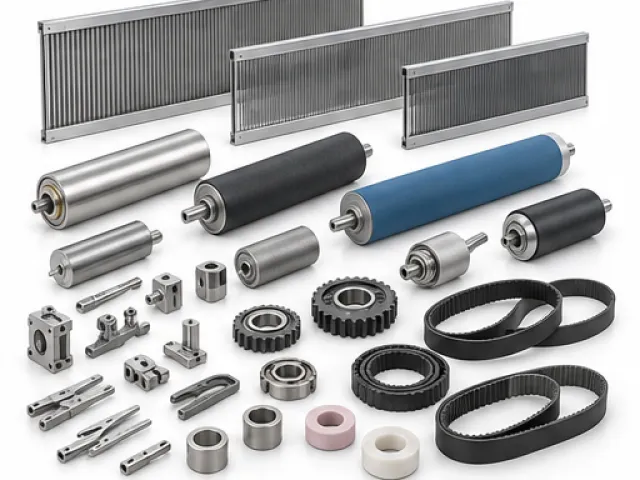
Generic parts & accessories machinery illustration · not the listed equipment
A mechanical selvedge tucking head from Micheng's large rapier-loom group, made in Shaoxing. It handles the middle edge position; outer edges take the separate K88 left/right heads. Micheng publishes no mounting dimensions, timing or speed, so request a dimensioned drawing with your offer. For a quote, send your loom model and revision, a marked photo of the position and a cloth sample with the edge you want.
Checklist and notes are not uploaded or saved after reload. Copy or download a draft to keep it. Opening the workspace does not send this draft.
Sources & review
Before ordering, ask Micheng to confirm in writing: the K88 version that suits your loom and head position, the drawing revision with mounting, drive and timing data, any rated speed, tolerance or service life it will stand behind, the items included in the price, and the address goods ship from. The public catalogue offers no full technical drawing, and the patent on record covers an electrical enclosure only.
Official company introduction and manufacturing presentation
Names the K88 middle-head assembly, places it in the large rapier group and gives Shaoxing as origin. No drawing, timing, speed or material data appears.
Publication: Undated; accessed 11 October 2026 · Reviewed: 2026-10-11
The No. 170 Qianshengling village address, telephone contacts and a named contact. No business email is shown.
Publication: Undated; accessed 11 October 2026 · Reviewed: 2026-10-11
CN220733185U original utility-model publication
China National Intellectual Property Administration · Issuer disclosure through a filing platform
Front page names 绍兴市秘成机电有限公司 as holder, with application on 30 August 2023 and grant publication on 5 April 2024. Covers an electrical-control enclosure and records an Anchang address.
Publication: Grant publication 5 April 2024; original PDF viewed 11 October 2026 · Reviewed: 2026-10-11