
K88 · Selvedge tucking
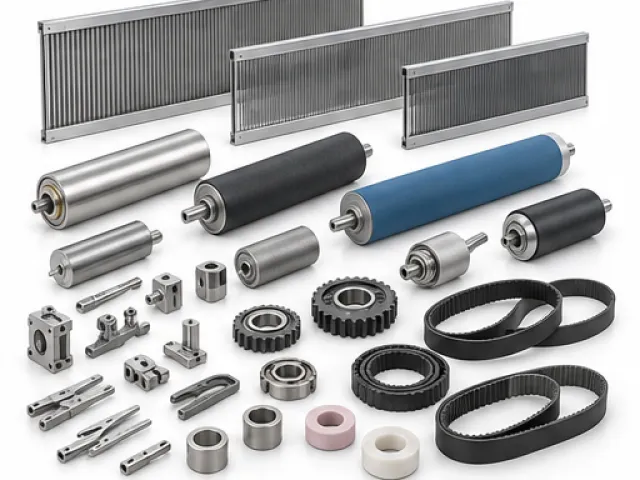
Equipment model · K88
The K88 middle-head assembly is a mechanical selvedge tucking unit that Micheng lists in its large rapier-loom group. It serves an edge position in the middle of the loom width, while the two outer sides have their own K88 left/right-head listing. The public entry gives the name, the loom group and Shaoxing as origin, with no dimensions, timing or speed. A quote request should carry the loom model, a marked photo of the head position, the code of the current part and an edge sample from your fabric.
Manufacturer: Micheng Electromechanical
- Model
- K88 middle-head assembly
- Function
- Selvedge tucking
- Catalogue group
- Large rapier-loom range
- Side heads
- Separate K88 left/right-head listing
- Origin
- Shaoxing, Zhejiang
- Dimensions and timing
- From the maker's drawing
Published specifications
Values below come from the maintained catalogue record. The guide review date does not renew an earlier specification: read the dated source notes and confirm a current, matched configuration before comparing products.
Swipe the table sideways to see every column.
| Parameter | Published value |
|---|---|
| Application | Large rapier-loom selvedge equipment |
| Assembly position | Middle head |
Is the middle head the part you need?
Micheng's official title for this part is K88 middle-head assembly. The outer edges use a different catalogue entry, the K88 left/right-head assembly, and the two are never described as interchangeable.
Mark the head position on a photo or loom drawing and show how the fabric width is laid out. Ask the maker to name the correct version and the mating parts that go with it. A product photo on its own is a poor guide to orientation.
Several catalogue pages carry the same middle-head title with no technical difference stated. Ask for one part number and one drawing revision for the unit quoted, so every later order points at the same piece. [1] [2]
Interface details to settle before ordering
None of the K88 entries publishes dimensions, rated speed or a timing chart. Fill in the table below together with the maker so the order carries real values for your loom. [1]
Swipe the table sideways to see every column.
| Item | You provide | Ask the maker for |
|---|---|---|
| Loom and current part | Make, model, revision and the code of the part fitted now | A written statement of the looms the K88 suits, with any limits. |
| Mounting | Your installation drawing or a measured reference | Mounting datums with dimensions, fasteners and mating parts. |
| Drive and timing | The present drive arrangement and the loom maker's timing reference | Connection method, timing setting and adjustment steps. |
| Clearance | Free space and the nearby moving and edge-handling parts | The running clearance the head needs in your setup. |
| Fabric layout | Yarn, weave, width layout and the accepted edge | Setup notes and the criteria for a representative trial. |
| Upkeep | Maintenance access and room conditions | Lubrication, inspection and wear-part instructions for the revision supplied. |
Describe the fabric and the edge problem
Tell the maker the warp and weft materials and the construction, and send a cloth sample with an edge you accept. Say whether the K88 replaces a worn head or changes the way the edge is formed, and describe the fault you want fixed.
Agree criteria you can see, such as edge appearance, consistency and loose ends. If the cloth goes on to winding or finishing, judge the edge after that handling as well, since a short piece cut at the loom can look better than the full roll.
This listing sits in the large rapier group. Get written agreement before fitting it to water-jet, air-jet or projectile looms, and ask which yarns and constructions a single setup is meant to cover on your weaving line. [1] [3]
Trial the fitted K88 on your loom
Fit and adjust the head by the loom and component instructions the maker approves. The steps below give a trial on your own yarn a clear pass or fail. [1]
Check the part against the order
Record the assembly code, drawing revision, mating parts and the position it goes into.
Confirm the setup
Have the fitter check mounting, drive relationship and clearances with the supplied instructions in hand.
Weave your reference cloth
Use the agreed yarn, weave and width layout, and note every loom setting.
Compare the edge
Hold the result against the accepted sample and keep cloth showing any loose ends, drift or other agreed faults.
Watch starts and stops
Look at edge continuity through your normal stop and restart sequence, at the loom speed you actually run.
Close out with records
File cloth samples, settings, adjustment notes and the final parts and maintenance list with the commissioning papers.
What the K88 price should cover
List each item in the offer: the head, mounting and drive parts, any edge-handling parts the setup needs, first spares and commissioning. Boxes, bases, arms, gears and supports appear elsewhere in the catalogue, and none of them comes with the K88 unless the quote names it.
Ask for an illustrated parts list with codes for the wear parts, plus the inspection and lubrication tasks, the adjustments an operator may make and who to call when the edge starts to change. The maker publishes no service life or replacement interval for this model.
If you need a material grade, surface treatment or dimensional tolerance, have it written on the drawing and the inspection sheet. Photos of CNC machining on the company site give no values for the unit you receive. [1] [2] [3]
Pricing, delivery and the final order
The same website runs news about edge finishing and deburring of metal parts. That material concerns metalwork, so base the K88 decision on the product title and its loom group.
The contact page places the company in Shaoxing but carries no dated K88 price, delivery date or test data. Get those for the exact part and your destination.
Before the unit is called a direct replacement, the offer should settle the drawing, the loom match and the acceptance terms. If the build proposed differs from the listing, change the part code and the trial plan to match, so the order never rests on the bare K88 name. [1] [2] [4]
Prepare a useful enquiry
Check the information you have ready. Your selections stay on this device as a draft; nothing is sent to a manufacturer.
0 of 8 items ready
Open enquiry workspace →Checklist and notes are not uploaded or saved after reload. Copy or download a draft to keep it. Opening the workspace does not send this draft.
Sources & limitations
Ask Micheng, before you order, to put in writing that the K88 middle head suits your loom model and position, the mounting dimensions, timing and clearances, any speed or service life it will commit to, and exactly which parts the price includes. These notes cover the middle-head assembly alone, not the side heads or the other loom groups, and the trial steps are a plan for your own acceptance.
K88 middle-head assembly, large rapier-loom group
Shaoxing Micheng Electromechanical · Undated; accessed 11 October 2026
The product entry itself: exact title, loom group and Shaoxing origin. It lists no drawing, timing, speed or material.
Official catalogue navigation and related parts
Shaoxing Micheng Electromechanical · Undated; accessed 11 October 2026
Lets you set the middle-head page beside the left/right-head pages and browse the loom-family groups. Deburring news on the same site concerns metalwork.
Official company introduction and manufacturing presentation
Shaoxing Micheng Electromechanical · Undated; accessed 11 October 2026
Background on Micheng and Hui Laite, the selvedge range, the CNC machining described and the markets named.
Official contact page
Shaoxing Micheng Electromechanical · Undated; accessed 11 October 2026
Shaoxing contact address at Qianshengling, phone contacts and a named person; no business email listed.
Each source above lists its publisher and the date it was checked. Editorial method · Report an outdated detail