Zhejiang Qifang Machinery builds textile machinery in the Keqiao economic development area of Shaoxing and markets it under the Lanhua name. The catalogue covers water-jet, air-jet and rapier looms, towel and jacquard machines, and preparation equipment for warping, winding and twisting. The model with the fullest published data is the LH2000 water-jet loom for nylon and polyester filament fabrics, built in five effective reed widths between 1,500 mm and 2,300 mm, with plain or dobby shedding and one or two weft jets. To get a useful quote, tell Qifang which loom family you are after, then send your yarn, weave, density and the fabric width you need.
Qifang sorts its catalogue into separate machine families, and each one leads to a different enquiry. Find the row that matches the cloth you weave and put the details from the last column into your first message.
Each family is quoted on its own. A mill that wants filament taffeta and towels from Qifang needs two specifications, and offers can only be weighed against each other when they answer the same one. [1][2][3]
Swipe the table sideways to see every column.
Which Lanhua machine family fits your fabric
Fabric or job
Lanhua family
Send with the first enquiry
Nylon or polyester filament cloth such as taffeta, umbrella and bag fabric or Oxford
LH2000 water-jet loom
Warp and weft yarns, weave, density, the width you need and the finishing the fabric will receive.
Fabrics you plan to weave with air insertion
QI-Z28 air-jet loom with electronic control functions
Your yarns, construction, colour changes and the compressed-air capacity available in the mill.
Patterned weaves and terry towels
SGD and GA rapier entries plus the towel and jacquard machines
Pattern or weave, yarn, width and pile details, so Qifang can pair a loom with suitable shedding.
Getting yarn and warps ready for the looms
Warping, winding and twisting machines such as SGD-203, SGD008 and 310G
The packages you receive, your warp requirements and which looms the prepared warps will feed.
02
Turning LH2000 options into one machine
Effective reed widths from 1,500 to 2,300 mm
Plain shedding on four, six or eight frames, or a dobby for up to sixteen
Single or double weft jet
The LH2000 water-jet table lists effective reed widths of 1,500, 1,700, 1,900, 2,100 and 2,300 mm. Reed width and the width of the cloth you sell are two different numbers. Tell Qifang the finished width you need and the stage at which you measure it, and ask it to explain which reed width it proposes.
Shedding comes as a plain unit on four, six or eight heald frames, or as a dobby carrying up to sixteen. Weft goes in through a single or double jet. Ask Qifang which combination it recommends for your cloth, and have the shedding unit and jet package named in the offer so you can compare configurations line by line. The large jacquard machines Qifang sells elsewhere are priced separately.
On both the Chinese and English pages the main-motor row is garbled, and its trailing figure cannot be read as a rating. Ask for a motor and electrical load schedule that matches the width and options you order. The catalogue also speaks of imported key components; ask which makes are fitted to the machine you buy. [2]
03
Water removal and mill services
Under a heading about fabric drying, the LH2000 table lists tubular water suction, a suction fan and an air and water separator. That is the loom's own water-removal kit. If your process needs drier cloth or a dryer after the loom, put it in the enquiry as its own line.
A water-jet weaving shed relies on clean water, recirculation or treatment, drainage and suction. Ask Qifang to state the supply, water quality and consumption the offered loom needs, which auxiliaries come with it and which you provide, and to send a layout with utilities marked for your chosen width.
Qifang's air-jet page promises lower cost, higher efficiency and zero discharge, with no test conditions attached. If you are choosing between air-jet and water-jet, compare them on measured water, air and power for the same accepted fabric, and assess the building work each one needs on its own terms. [2][3]
04
Running a comparable fabric trial
Trial planning for Lanhua looms
A fabric name such as taffeta or Oxford covers many constructions. Bring a reference sample or construction sheet, and keep the same yarn and inspection method for every offer you compare. A trial on your own yarn gives you figures you can write into the contract.
Fix the construction
Write down warp and weft material and counts, weave, density, colour or weft-selection needs, and the width together with the stage where it is measured. Note the end use too, bearing in mind that weaving alone tells you nothing about coating or wear behaviour.
Note the machine on test
Record model, reed width, heald frames or dobby, jet layout, weft preparation and detection, selvedge handling and the water-removal parts fitted.
Agree how cloth is judged
Set limits for construction, width, appearance and faults before the run starts. Keep greige measurements apart from results taken after washing, coating or other finishing.
Count good fabric
Log settings, run time, stops, operator actions, rejected metres and accepted output. Meter water and power on the same run if running cost matters, since a top speed setting says little about a full shift.
Carry the result into delivery
Keep approved samples, settings and any deviations, and repeat the test where needed. Make the supply list, training and commissioning duties match the setup that passed.
05
Company background
Zhejiang Qifang Machinery Co., Ltd. presents its textile machines under the Lanhua name. Its contact page gives 108 Meishu Road in the Keqiao economic development area of Shaoxing. Qifang also says Lanhua gained recognition in 2006; if that matters to your approval process, ask what the recognition was and whether it still applies.
A Keqiao district list of firms proposed for the second batch of 2020 employment-stabilisation social-insurance refunds carries the exact Chinese company name at row 2227 on page 102. It places the company in local administrative records for that year. It says nothing about payment, present finances, factory capacity or machine certification.
When you reach the order stage, ask for the selling entity's full details, the Lanhua model marking, an itemised equipment list and the documents for your configuration. Get price, lead time, warranty, installation, spare parts and support in your country in writing. A short guide to reading a manufacturer profile explains what each type of company record can and cannot tell you. [1][4][5]
Equipment & specifications
Published model or series information. Open the equipment record for its full scope and configuration notes.
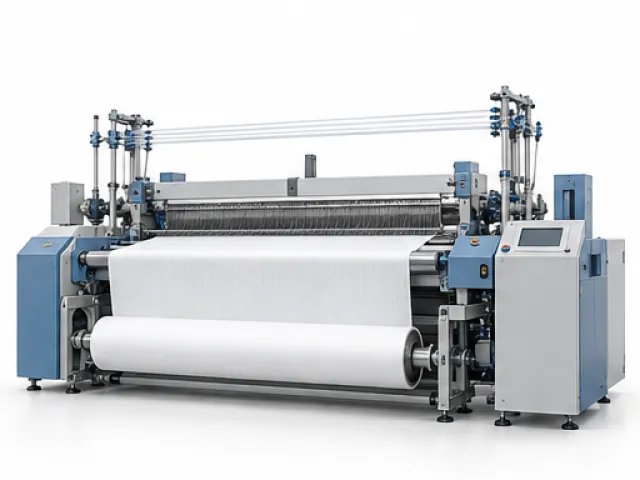
Generic weaving machinery illustration · not the listed equipment
The LH2000 is a Lanhua water-jet loom from Zhejiang Qifang for nylon and polyester filament cloth such as taffeta, umbrella fabric and Oxford. Reed widths run from 1,500 to 2,300 mm, shedding is plain on up to eight frames or dobby on up to 16, and weft enters through one or two jets. Send your filament, weave, density and finished width, and ask for a corrected motor rating with the quote.
Checklist and notes are not uploaded or saved after reload. Copy or download a draft to keep it. Opening the workspace does not send this draft.
Sources & review
Specifications on this page come from Qifang's own catalogue and contact pages, and the 2020 listing comes from a Keqiao district document. Nobody from the site has run a Lanhua loom or visited the factory. Before ordering, ask Qifang to confirm in writing: the loom family and full configuration offered, the corrected motor and electrical schedule, the makes of key components, water or air needs and included auxiliaries, the fabric quality agreed after the trial, and the price, lead time, warranty and spare-parts terms.
Qifang company introduction and Lanhua presentation