Shaoxing Guangfan Machinery Equipment builds fabric-handling machines in Shaoxing. Its main line is inspection and rolling, led by the G7, which comes in a knitted and woven version and an automatic edge-alignment version. The company also offers edge and centre correction, fabric slitting, drying equipment and spare parts for rotary-screen printing. To get a useful quote, send Guangfan a sample of your fabric, its width, how it arrives and the roll you need at the end.
A G7 order covers inspection and rolling. List slitting, drying or packing as their own items if you want them.
Guangfan's company introduction groups its business into five areas. Each one is a separate purchase, so begin by naming the step in your plant that needs a machine. Rotary-screen printing appears only as spare parts, and the introduction names no complete printing line. Most of these steps sit in finishing, after dyeing and before the fabric is packed or cut. [1]
Swipe the table sideways to see every column.
What Guangfan makes and how to pick a line
Step in your plant
Guangfan line
Put in the first enquiry
Check fabric and wind it into rolls
Inspection and rolling machines, including the G7
Fabric type, width, how it is fed in, how defects are marked and the finished roll you want.
Keep the web straight
Edge and centre correction equipment
Whether you guide on the edge or the centre, the fabric speed and the sensor you prefer.
Cut fabric into strips or sheets
Fabric slitting and cutting machines
Cut widths or sheet lengths, the material and where the cutter joins the rest of the line.
Dry or support printing
Dryers and rotary-screen printing spare parts
The machine or part number, your process conditions and who fits it.
02
The two G7 inspection and rolling machines
Guangfan publishes the G7 on two pages dated 22 February 2021. The first is for inspecting and rolling knitted and woven fabric and talks in general terms about rolling, packaging and the range of materials it can take. The second is the automatic edge-alignment G7. It adds variable-frequency speed adjustment, a length counter and photoelectric edge correction.
Because both carry the same model name, tell Guangfan which version you want and ask for the equipment list of that build. The G7 page sets out the questions on width, speed and roll size for each version. A third catalogue entry, the 200 automatic edge-alignment rolling machine, is sold as tensionless. If low tension matters for your knit, ask whether the G7 offers the same arrangement or whether the 200 suits you better.
The photoelectric sensor keeps the edge in line as the roll builds. It is a guiding device. If you need a camera system that finds holes, stains or shade faults, ask for it as a separate item with its own data. The same goes for wrapping or sealing: the packaging text on the first page names no packing unit. [2][3][4]
03
Cutting machines in a wall-covering project
An environmental-impact report from April 2020 covers a planned 4.5-million-metre seamless wall-covering plant for Zhejiang Lianxiang Intelligent Home. Its equipment list, Table 1-6, names Guangfan under its full Chinese company name for two items: a wall-covering strip-cutting machine and a wall-covering sheet-cutting machine with a line.
The report lists planned equipment, so it tells you Guangfan was chosen for cutting work in that plan. In the same table, the inspection machines and the automatic packaging line come from other suppliers. If cutting is part of your project, ask Guangfan for a reference from a similar installation. For background on weighing records like this, see the guide to reading a manufacturer profile. [5]
04
Set up a test run with your own fabric
Bring a real sample of the fabric you will run every day, as it arrives at the machine and as it must leave. Knits can stretch, curl at the edge and lose shape on the roll, so agree how distortion is judged. For woven cloth, add edge quality, creases and the inspection standard you work to. Write the conditions down before you compare offers, then use the same trial for every supplier.
Describe the fabric
Give construction, width, finish, stretch and the incoming format. Say which step causes trouble today and how the finished roll must look.
Agree the build
Ask for a layout and a table of figures for that fabric. Name the guiding, length counting and lighting you need, and any cutting or packing machines that go with it.
Run the test
Use a length you have measured yourself and agreed pass marks for roll edges, winding and fabric condition. If people inspect during the run, decide who marks defects and how.
Compare like with like
Note the speed you could actually use, every stop, rejected metres and operator work. Line up offers on the same functions, utilities, start-up help and paperwork.
05
Service, spares and the line around the machine
Guangfan says it develops machines around what each customer asks for and provides after-sales service. Turn that into terms you can check. Ask for response times, who comes to install, the warranty period and the price of commissioning, and write them into the contract. Ask for a list of spare parts and wear parts with prices.
Confirm which company signs and supplies, the machine serial plate, manuals, electrical and air needs, and who is responsible where the G7 meets your existing machines. If you are changing an existing line, the machines before and after the G7 stay your responsibility unless Guangfan agrees in writing to supply and connect them. [1]
Equipment & specifications
Published model or series information. Open the equipment record for its full scope and configuration notes.
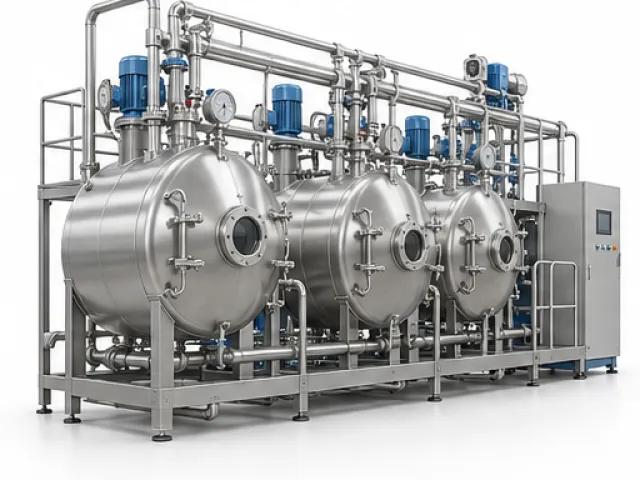
Generic dyeing & finishing machinery illustration · not the listed equipment
Guangfan's G7 inspects knitted and woven fabric and winds it into rolls. One build adds automatic edge alignment, with variable-frequency speed control, a length counter and photoelectric edge correction. Guangfan's pages print no width, speed or roll-size figures. For a quote, name the build you want, send a cut of your fabric, its width and how it arrives, and ask for those figures for your cloth.
Checklist and notes are not uploaded or saved after reload. Copy or download a draft to keep it. Opening the workspace does not send this draft.
Sources & review
Before ordering, ask Guangfan to confirm in writing: the G7 version and its equipment list, working width, running speed, largest roll size and weight, power and air needs, whether edge guiding and a length counter are fitted, any camera inspection or packing unit and its data, the test result on your fabric, the warranty term and service response, and the company that signs the contract.
Where Guangfan is based and the product lines it names: inspection and rolling, edge and centre correction, slitting, drying, and rotary-screen printing spare parts.
Publication: Undated; accessed 11 October 2026 · Reviewed: 2026-10-11
G7 knitted/woven fabric inspection and rolling machine
A rolling machine sold under the number 200, described as automatic edge alignment with tensionless rolling, plus general troubleshooting notes.
Publication: 23 February 2021 · Reviewed: 2026-10-11
Environmental-impact report for a seamless wall-covering project, Table 1-6
Zhejiang Hanbang Environmental Protection Technology; government-hosted public report · Independent institutional record
An April 2020 equipment schedule for Zhejiang Lianxiang Intelligent Home. Table 1-6 on printed page 4 names Guangfan as the supplier of two wall-covering cutting machines.